

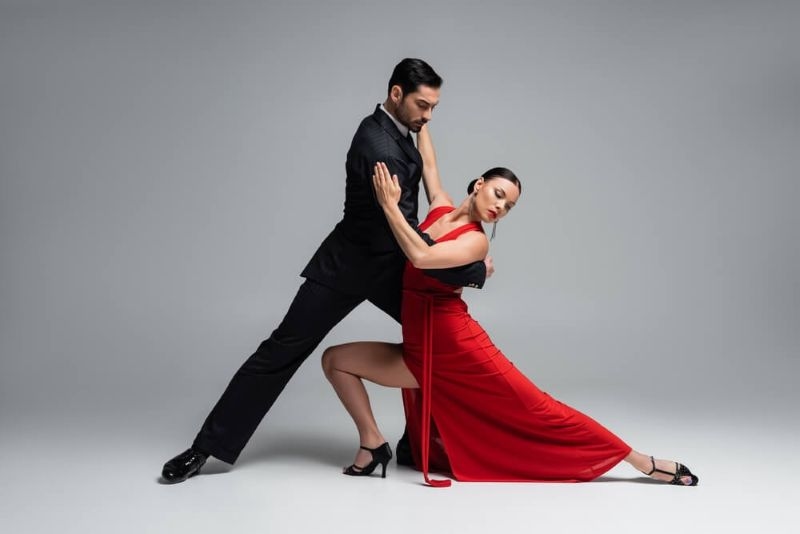
Tango just grabs you—there’s no other way to put it. Maybe it’s the closeness, that quiet tension, or the way two people can glide together without uttering a word. It’s more than dance; it’s a conversation, a feeling, and sometimes a little story you tell right there on the floor.
If you've ever watched tango and wondered, “How do they make it look so natural?” you're definitely not alone. Tango packs so much into every step—it's richer and simpler than it seems at first glance. There's history, unique styles, expressive music, and some actual benefits for your mind and body. Let’s dive in, one step at a time.
Tango has a strange power. Even newbies feel it right away. Sure, it follows a structure, but there’s also freedom. It keeps dancers coming back. That mix—it never gets old.
So why does it last, generation after generation? Let’s talk about it.
Unlike dances where you memorize routines, tango is all about improvising. You're reacting to your partner in real time. There's no set sequence—just a shared language. That makes every tango feel personal, and honestly, each one is just a little bit different.
Tango isn’t just steps and turns. It's about connection, timing, and reading those tiny signals from your partner. People fall for it because it:
And that moment—that first time when everything syncs up with the music, the movement, your partner—it sticks with you.
Suggested Reading: The Art of Tap Dancing: From Broadway to Global Stages
To really get tango, you have to know its roots. Its history is messy—in a good way. Migration, struggle, creativity, it’s layered.
Tango started in Buenos Aires in the late 1800s. Immigrants from Europe, Africa, and other places brought their music and dances. These blended into something raw, emotional, and totally new.
At first, tango was considered scandalous. It popped up in working-class neighborhoods and was seen as way too intimate. Eventually, though, Paris got hold of it in the early 1900s, and suddenly, it was high society’s thing.
It spread from there, all over the world. Even now, it’s famous globally but still feels deeply Argentine.
Not all tango looks the same. The style changes a lot depending on where you learn it or who’s teaching.
This is the original—super expressive. It focuses on improvising, connecting, and interpreting the music. Moves are fluid, and the embrace shifts from open to closed.
Ballroom came later, especially in Europe and the U.S. It’s more structured—think competitions, sharp movements, fixed poses, and clear steps. It’s dramatic and theatrical.
This one’s the modern twist. Tango nuevo experiments with space, new movements, and sometimes even non-traditional music. Some dancers love the creativity; others want the classics. Both opinions are pretty valid.
| Style | Key Focus | Movement Style | Setting |
|---|---|---|---|
| Argentine Tango | Connection, improvisation | Smooth, fluid | Social dance floors |
| Ballroom Tango | Precision, performance | Sharp, dramatic | Competitions |
| Tango Nuevo | Innovation, exploration | Open, experimental | Modern dance spaces |
Each style offers a different experience. Choosing one often depends on personal preference.
Tango steps can look tricky. But if you break them down, they're pretty logical.
Everything starts with the walk. It sounds simple, but tango’s walk is pure art. You focus on controlled steps, steady weight shifts, and staying connected with your partner. It’s not about speed—it's all about purpose.
The embrace is how dancers communicate. Most cues are subtle—a shift in weight, a squeeze, even synced breathing. Do you need dance experience? Nope. After some practice, it just starts to feel natural.
Once you get the basics, you’ll learn things like the salida (the basic starting move), ochos (figure eights), and giros (turns). These are the building blocks for all the fancy stuff later on.
Don't Miss: Salsa Dancing: Explore Latin Culture and Rhythmic Moves
Music isn’t just background noise in tango; it’s the heartbeat.
Traditional tango music has a distinct rhythm and a deep, emotional feel. Typical instruments? Bandoneón, violin, piano, double bass. It sounds nostalgic, sometimes even a little sad.
Dancers don’t just count beats; they interpret them. Some moves sync with the rhythm, others stretch it and create tension. That’s how tango gets so expressive.
It’s not just about looking cool. Tango gives you some real benefits.
Tango lifts your posture, balance, and coordination. If you do it often, you’ll strengthen your core, become more flexible, and gain better overall control. It’s gentle, but you’ll feel it.
Here’s the good stuff. Tango makes you focus. You're listening, moving, sensing your partner—all at once. It wipes out distractions; some dancers even say it feels meditative.
You’re not dancing alone—unless you want to. Most tango happens in groups. You meet people, interact, and share moments. It’s less about perfecting the steps, more about sharing an experience.
Starting tango can seem intimidating, but honestly, it’s easier to jump in than it looks.
Most people begin with group classes. Studios everywhere run beginner sessions. You don’t need a partner—they usually rotate everyone, which helps you learn faster.
You’ll cover posture, walking, connection, and some basic moves. Progress really happens step by step.
Also Read: Belly Dancing: An Ancient Art of Grace and Body Control
Tango is that rare blend: movement, music, and raw emotion all at once. There’s history in every step, and expression in every pause. And it’s open to everyone—not just professionals.
Don’t worry about mastering it on day one. Just start.
Whether you’re pulled in by the sound, the culture, or curiosity, tango gives you something unique—something that gets deeper with every dance, every pause, and every shared moment.
Tango stands out for its close partner connection, expressive moves, and musical intensity—Argentine tango especially.
The first steps might feel tough, but the basics are easy enough. Stick with it, and you'll get comfortable soon.
Argentine features improvisation and connection. Ballroom is all about set steps and competitions.
No. Most classes rotate dancers, so you show up solo and still get plenty of practice.
This content was created by AI